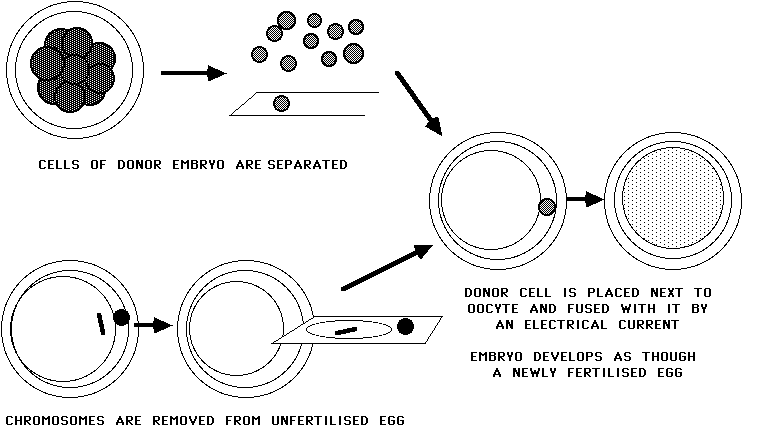
| Nuclear transfer involves transferring the complete genetic material (the DNA contained in a nucleus) from one cell into an unfertilised egg cell whose own nucleus has been removed. |
| The research carried out by PPL Therapeutics plc and the Roslin Institute is pioneering. This is the first time the complete genetic material from an adult mammalian cell has been used in the development of a new individual. |
| The technique involves several steps (see diagram below). First, the donor cells are grown under special conditions in culture. In this way the number of cells can be increased by several orders of magnitude. It is also possible to make genetic modifications and to select just those cells in which the desired modification has occurred and multiply these up. These cells are then fused with an unfertilised egg from which the introduced nucleus can lead to the formation of an embryo. The embryos are then transplanted into sheep and lambs are born naturally. |
| This technology could allow the production of genetically identical groups of animals which possess a desirable genetic trait. |
| The work to date has shown the technology to be successful only in sheep. |
| PPL Therapeutics hopes to use this technique to enable the production of new drugs for the treatment of a range of conditions using its transgenic technology. This could lead to cheaper drugs for currently untreatable diseases. |